 Image 1 of 3
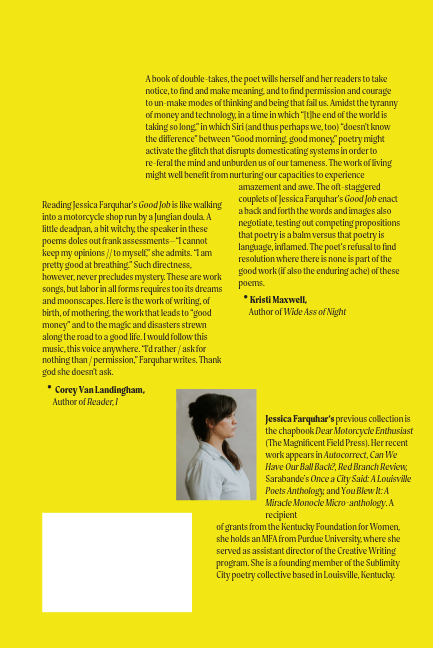 Image 2 of 3
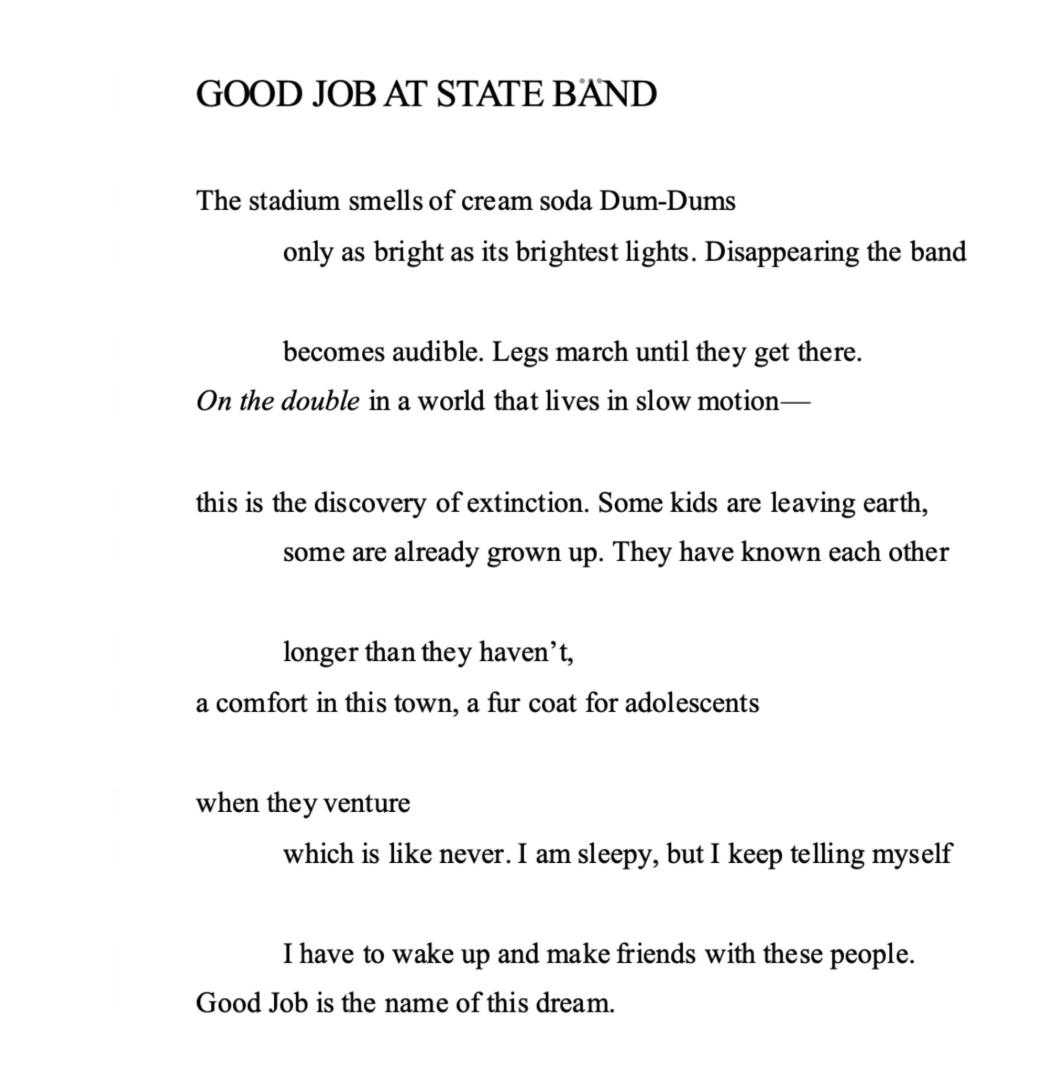 Image 3 of 3
In Good Job, Jessica Farquhar maps the overlapping terrains of motherhood, artmaking, and professional life, examining how worth becomes entangled with visibility and the necessity of putting oneself out there. "I am sleepy, but I keep telling myself / I have to wake up and make friends with these people. Good Job is the name of this dream." With language both startling and tender, Farquhar illuminates the hidden economies of daily life—from the body's wisdom in expressing milk to the arithmetic of self-worth. The title's triple resonance—parental praise, employment security, and artistic achievement—threads through poems that refuse easy answers about what constitutes meaningful work. Good Job charts the speaker's journey out from the shadows toward a fierce claiming of space and voice.
In Good Job, Jessica Farquhar maps the overlapping terrains of motherhood, artmaking, and professional life, examining how worth becomes entangled with visibility and the necessity of putting oneself out there. "I am sleepy, but I keep telling myself / I have to wake up and make friends with these people. Good Job is the name of this dream." With language both startling and tender, Farquhar illuminates the hidden economies of daily life—from the body's wisdom in expressing milk to the arithmetic of self-worth. The title's triple resonance—parental praise, employment security, and artistic achievement—threads through poems that refuse easy answers about what constitutes meaningful work. Good Job charts the speaker's journey out from the shadows toward a fierce claiming of space and voice.